
Tempered and Laminated Glass in Dubai
Toughened and Laminated Safety Glass for Doors, Partitions, Railings, Canopies and Tabletops, Specified and Fitted by One Team
Tempered (toughened) glass is heat-treated to be about four to five times stronger than ordinary glass and breaks into small blunt pieces. Laminated glass bonds two or more panes with a plastic interlayer, so it stays in place when it cracks. In Dubai, supplied and installed glazing costs about AED 300–600 per m² toughened and AED 450–800 per m² laminated.
What Tempered and Laminated Glass Are
Tempered glass, also called toughened glass, is ordinary (annealed) float glass that has been cut to size, heated to about 620°C and then cooled very quickly with air jets. This locks the outer surfaces in compression, which makes the glass about four to five times stronger than annealed glass of the same thickness. When it does break, it shatters into small, blunt pieces instead of long sharp shards.
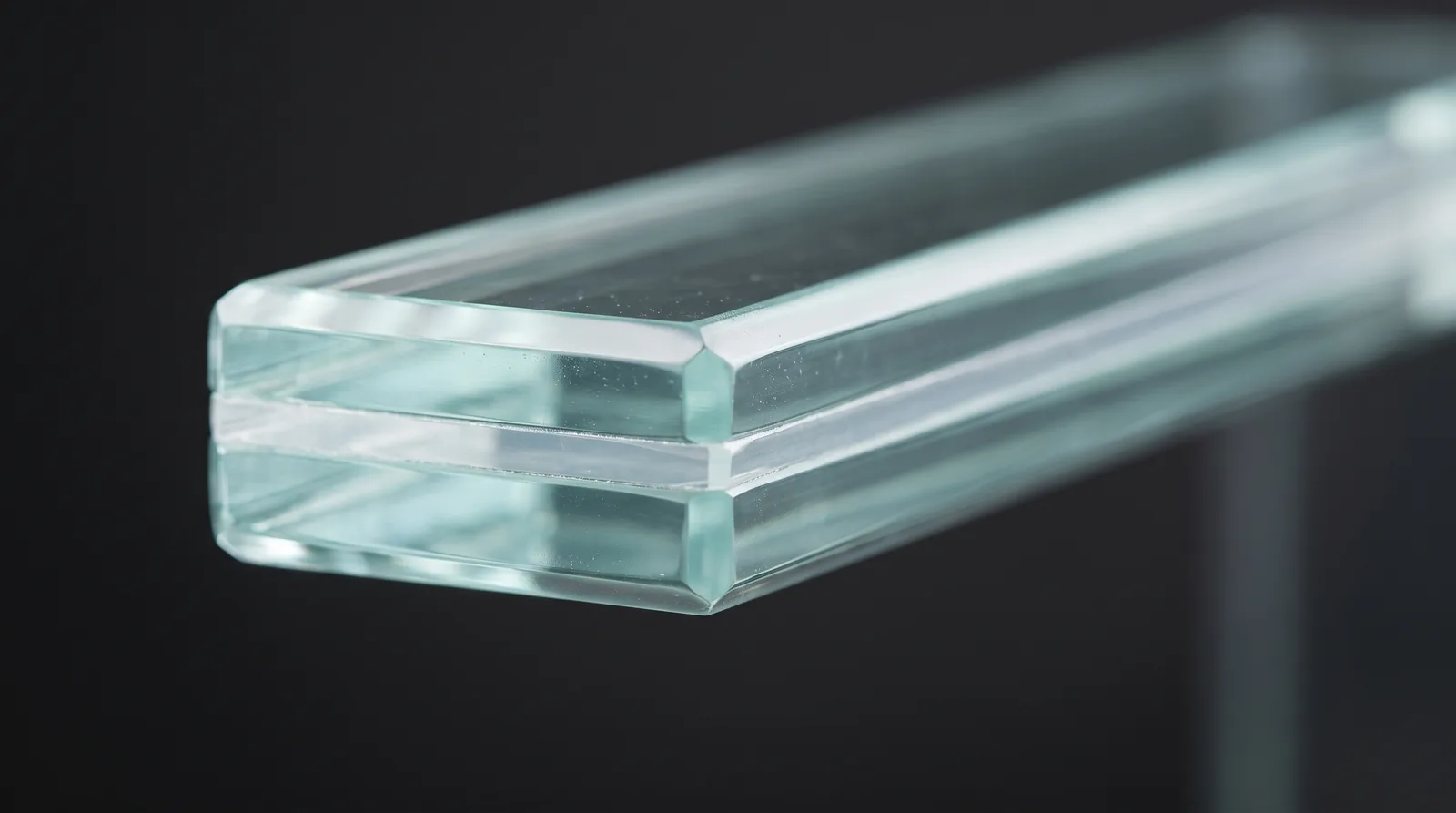
Laminated glass is two or more panes bonded together with a tough plastic interlayer, usually PVB (polyvinyl butyral) or the stiffer SGP (ionoplast). When it is hit, the glass may crack, but the pieces stick to the interlayer and the panel stays in its frame. The panes themselves can be annealed, heat-strengthened or toughened.
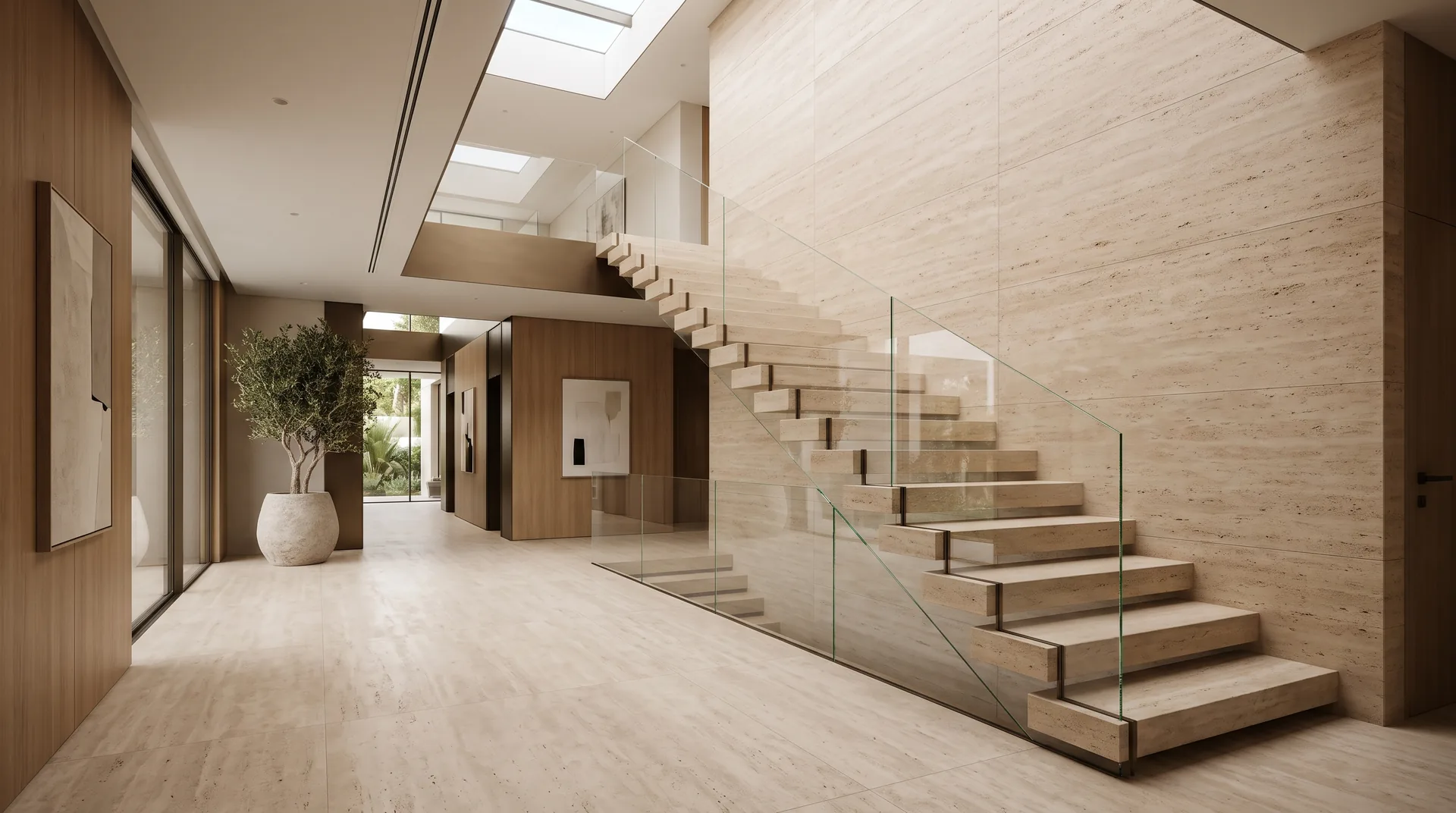
The two are often combined. Toughened laminated glass gives the strength of toughened glass and the hold-together safety of laminated, and is what we use for staircases, railings, canopies and glass floors. Our team has worked in Dubai since 2008 as a renovation and fit-out company, and we choose the glass for each job by where it goes, what it must resist and what happens if it breaks. This page is the guide behind every other page in our glass installation services.
Tempered vs Laminated Glass Compared
Which is safer depends on the risk. Toughened glass is stronger; laminated glass stays in place when it breaks.
| Feature | Tempered (toughened) | Laminated | Toughened laminated |
|---|---|---|---|
| Strength | About 4–5 times ordinary glass | Similar to the panes it is made from | Highest |
| How it breaks | Small blunt pieces, the panel falls out | Cracks but stays bonded in place | Cracks, stays in place, carries some load |
| Can be cut after making | No | Annealed laminated yes; toughened no | No |
| Sound reduction | Standard | Better, best with acoustic interlayer | Better |
| UV protection | Low | Blocks about 99% of UV | Blocks about 99% of UV |
| Typical cost per m² | AED 300–600 | AED 450–800 | Quoted per job |
| Best for | Doors, partitions, shower glass, tabletops | Windows, skylights, shopfronts, low-level glass | Railings, staircases, canopies, glass floors |
Which is safer, tempered or laminated glass? Laminated glass is safer wherever a broken panel must not fall out, such as overhead glass, railings and glass at a drop. Tempered glass is safer where impact is likely and falling pieces are not a hazard, such as doors and partitions, because it is much harder to break and the pieces are small and blunt.
Where Each Type Is Used
Doors and Partitions
10–12mm toughened glass. Strong against knocks and safe if broken. See glass partitions and glass doors.
Shower Glass
8–10mm toughened glass, often low-iron. Laminated is not needed in a standard shower. See shower glass enclosures.
Railings and Staircases
Toughened laminated glass, usually two 10mm or 12mm panes, so the barrier stays standing if one pane breaks.
Canopies, Skylights and Roofs
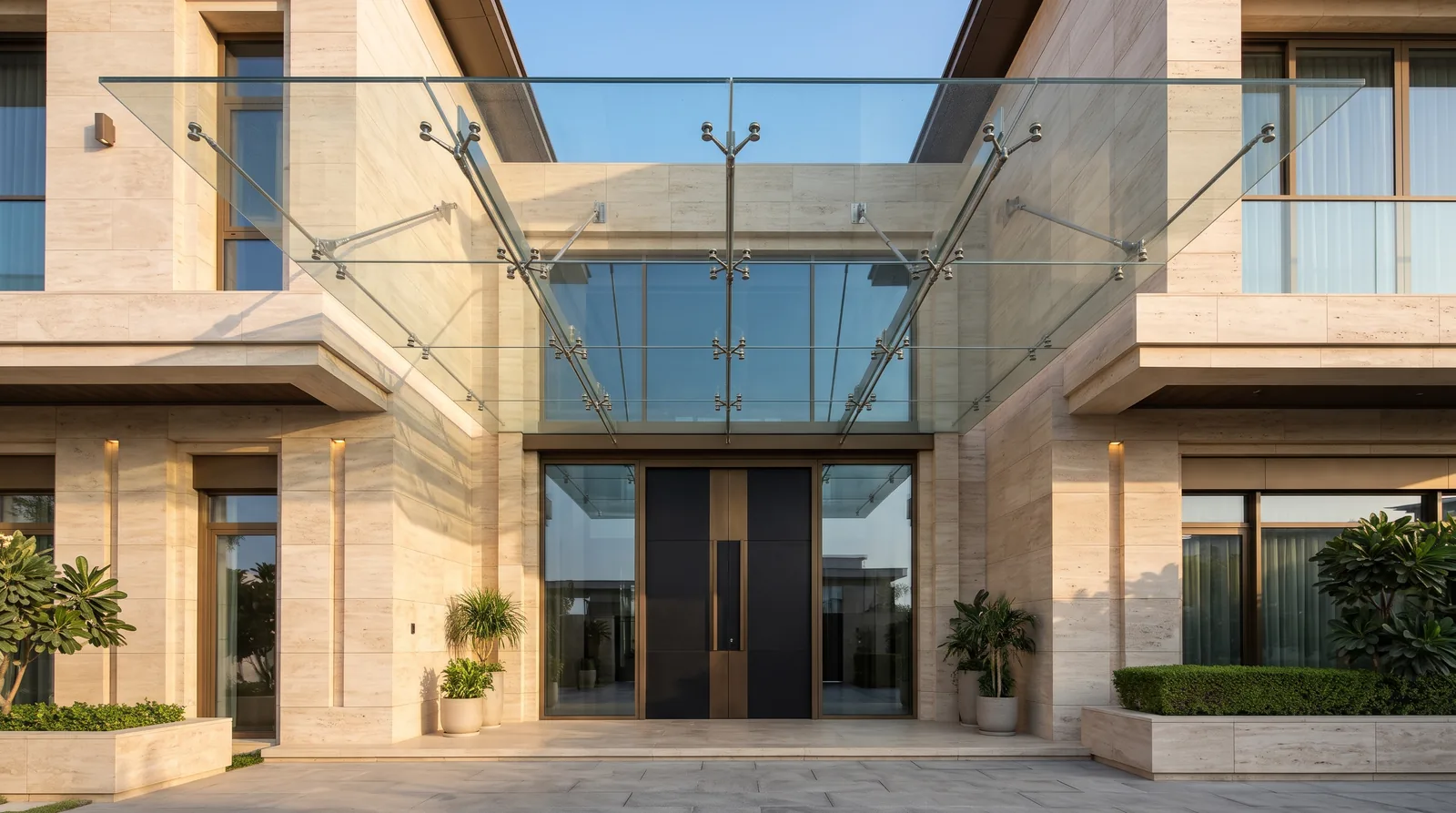
Laminated glass, toughened or heat-strengthened, so broken glass is held overhead instead of falling on people below.
Shopfronts and Ground-Floor Windows
Laminated glass for security. It resists break-ins because the interlayer holds after the glass cracks.
Tabletops, Shelves and Splashbacks
Toughened glass, 6–12mm. Back-painted toughened glass behind a hob. See custom glass works.
Where is laminated glass required? Building codes and structural engineers normally call for laminated glass where a broken panel could fall on people or where the glass is a barrier at a drop: overhead glazing, skylights, canopies, glass floors, and balustrades and railings. The Dubai Building Code and the approved drawings for your building set the exact rules for each case, so we confirm the glass specification with the consultant or building management before ordering.
PVB vs SGP Interlayers
The interlayer is what makes laminated glass work. The two common types behave differently after the glass breaks.
PVB (polyvinyl butyral) is the standard interlayer, usually 0.38mm, 0.76mm or 1.52mm thick. It is flexible, holds broken glass well and reduces sound, and an acoustic PVB adds a few more decibels of noise reduction. It suits windows, partitions, shopfronts and most canopies.
SGP (ionoplast) is a much stiffer, stronger interlayer. A broken SGP panel stays flatter and keeps carrying more load, and its edges resist moisture better when they are left exposed. That makes it the preferred choice for frameless railings with a clamped base, glass floors, stair treads and large canopies.
| Feature | PVB interlayer | SGP interlayer |
|---|---|---|
| Stiffness | Flexible | Very stiff |
| After breaking | Holds glass, panel sags | Holds glass, panel stays flatter |
| Exposed edges | Best protected in a frame or channel | Better moisture resistance |
| Sound reduction | Good; acoustic PVB best | Good |
| Cost | Standard | Higher; quoted per job |
| Best for | Windows, partitions, shopfronts | Frameless railings, floors, large canopies |
Thickness Guide
Our usual starting points. The final thickness depends on the size, the fixing and the load, and is confirmed on the drawing.
| Use | Typical glass | Notes |
|---|---|---|
| Shelves and small tabletops | 6–10mm toughened | Thicker for long spans or heavy loads |
| Kitchen splashbacks | 6–8mm back-painted toughened | Cut-outs made before toughening |
| Shower screens and doors | 8–10mm toughened | Low-iron for the clearest look |
| Interior glass doors | 8–12mm toughened | 12mm for pivots and tall doors |
| Frameless partitions | 10–12mm toughened | 12mm above about 2.7 m high |
| Frameless entrance doors | 12mm toughened | Laminated toughened for extra security |
| Glass railings and balustrades | Toughened laminated, e.g. 10+10mm or 12+12mm | Set by the fixing and the barrier load |
| Canopies and skylights | Laminated, toughened or heat-strengthened | Engineered for each design |
Why Tempered Glass Sometimes Breaks by Itself
Why does tempered glass break for no reason? Very rarely, toughened glass shatters without being hit. The usual cause is a tiny nickel sulphide (NiS) particle inside the glass, left from manufacturing. Over months or years it slowly expands, and because toughened glass is under high internal stress, that is enough to break it. Edge damage during fitting, a stone chip or a metal clamp touching the glass can also cause a delayed break.
What is heat-soak testing? A heat-soak test reheats the toughened glass in an oven, to about 290°C for several hours, so panels containing nickel sulphide break in the factory instead of in your home. The European standard for this is EN 14179. It greatly reduces the risk but cannot remove it completely. We recommend heat-soaked glass for large overhead, facade and balustrade panels, where a break is costly or dangerous. It adds cost and a few days to the lead time, quoted per job.
Good fitting matters as much as the glass. Glass must never touch metal directly. Every clamp, patch and channel uses rubber or plastic gaskets, and edges are polished, not left rough. Most "spontaneous" breaks we inspect started at a chipped edge or a hard contact point.
Safety Glass in Dubai Heat and Sun
Can glass crack from the heat in Dubai? Yes, ordinary annealed glass can. When part of a pane sits in strong sun and part stays cool, behind a curtain, a shadow or a frame edge, the hot area expands while the cool edge does not. That difference can crack annealed glass, usually starting at the edge at right angles. This is called a thermal stress crack, and it is common on sun-facing windows and skylights in the UAE summer.
The fix is the right glass. Toughened glass and heat-strengthened glass resist much larger temperature differences than annealed glass, so we use them wherever glass is exposed to direct sun with partial shading: skylights, canopies, sun-facing doors and glass behind dark blinds. Tinted and reflective glass absorbs more heat, so it should almost always be toughened or heat-strengthened.
Double glazing for heat and noise. A double-glazed unit (DGU) is two panes with a sealed air or gas gap between them. It cuts the heat coming through the glass and reduces noise from roads and construction. In a DGU, one or both panes can be toughened or laminated, so a sun-facing villa window can be safe, quiet and cooler at the same time. A DGU costs about AED 450–1,200 per m², supplied and installed.
Low-iron, tinted and coated options. Low-iron (extra-clear) glass removes the green tint seen on thick glass edges and usually adds 20–30% to the glass cost. Bronze, grey and reflective tints reduce glare, and solar-control coatings reflect heat while keeping the view. All of them can be toughened or laminated.
Replacing Old or Unsafe Glass
Many older Dubai villas and apartments still have ordinary glass in places where safety glass is the norm today.
Old Glass Doors and Side Panels
Doors and the glass beside them are the most likely to be hit. Unstamped glass in these places should be replaced with toughened glass.
Tabletops and Shelves
Old annealed tabletops break into long sharp pieces. Toughened glass of the same size and edge costs little more and is far safer.
Cracked Windows and Skylights
A cracked pane is replaced like for like or upgraded to laminated or double-glazed glass, matched to the frame and the sun exposure.
How to Tell If Your Glass Is Tempered
Look for the stamp. Toughened safety glass normally carries a small permanent mark in one corner, sandblasted or printed, with the maker's name and the standard it meets, such as EN 12150 for toughened glass. Laminated glass may be marked to EN 14449 or EN ISO 12543, and safety glass is often classed by its impact performance under EN 12600.
No stamp? Look through the glass with polarised sunglasses at an angle. Toughened glass often shows faint dark patterns or stripes, from the air jets used to cool it. Laminated glass shows two reflections close together at the edge and a visible interlayer line. If you are unsure, we check it on site.
Why it matters. Ordinary annealed glass breaks into long, sharp pieces. If an old door, shower or tabletop has no safety-glass mark, we recommend replacing it with toughened glass.
How Much Do Tempered and Laminated Glass Cost in Dubai?
In Dubai, supplied and installed glazing costs about AED 300–600 per m² for 10–12mm toughened glass, AED 450–800 per m² for 6.38–10.76mm laminated glass, and AED 450–1,200 per m² for a double-glazed unit. Laminated glass usually costs 50–60% more than toughened glass of the same thickness.
Indicative 2026 Dubai pricesFixed, itemised written quote after a free site visit
| Item (supplied and installed) | Price in AED |
|---|---|
| Toughened glass, 10–12mm | 300–600 per m² |
| Laminated glass, 6.38–10.76mm (PVB) | 450–800 per m² |
| Double-glazed unit (DGU) | 450–1,200 per m² |
| Toughened laminated railing glass | Quoted per job |
| SGP interlayer instead of PVB | Quoted per job |
| Heat-soak test | Quoted per job |
What changes the price. The glass type and thickness; the panel size (very large panels need special handling); low-iron, tinted or acoustic options; edge polishing, holes and cut-outs; heat-soak testing; and the fixing system, from simple channels to stainless clamps and spider fittings. Railing, canopy and floor glass is engineered for the design, so it is quoted from a drawing.
Replacing existing glass. To replace a broken or unsafe panel, we measure the opening, match the thickness and drillings, and supply toughened or laminated glass as the use requires. Send a photo on WhatsApp for a price range.
Not Sure Which Glass You Need?
Send a photo of the space and tell us what the glass is for. We will tell you which glass and thickness suits it and give a price range the same day, then confirm everything after a free site survey. Prices are indicative for 2026.
How Long Does Safety Glass Take?
Survey
Opening measured and the right glass agreed.
Toughened
Cut, edged, drilled and toughened.
Laminated
Toughened panes laminated after toughening.
Heat-soak
Extra oven test for large or overhead panels.
Most toughened glass is fitted one to two weeks after the survey. Laminated, heat-soaked, tinted and very large panels take longer, and we confirm the lead time on the quote. Fitting itself usually takes one day.
4 Safety Glass Mistakes We See in Dubai
Ordinary glass in a door or tabletop. Annealed glass breaks into dangerous long shards. Any door, partition, shower or table glass should be toughened.
Toughened-only glass overhead or at a drop. If a single toughened pane breaks in a canopy or railing, the whole panel falls. Overhead and barrier glass should be laminated.
Cutting or drilling after toughening. Toughened glass cannot be altered. Any cut-out, hole or trim after toughening shatters it, so every size is checked before ordering.
Glass touching metal. A clamp or bolt pressing straight on the glass creates a stress point that can break it months later. Every fixing needs a gasket.
Tempered and Laminated Glass Across Dubai
Safety glass supplied and installed in every Dubai community, from villas in Emirates Hills, Palm Jumeirah and Dubai Hills to apartments, offices and shops in Downtown, Business Bay, JLT and Dubai Marina.
- 61communities covered
- 3service zones
- Freesite visit before we quote
- Ownin-house tradespeople
Villa communities
- Emirates Hills
- Palm Jumeirah
- Dubai Hills Estate
- Al Barari
- Arabian Ranches
- Arabian Ranches 2 & 3
- Jumeirah Golf Estates
- District One
- Tilal Al Ghaf
- DAMAC Hills
- DAMAC Hills 2
- The Villa
- Mudon
- Villanova
- The Springs
- The Meadows
- The Lakes
- Emaar South
Waterfront & central
- Dubai Marina
- Jumeirah Lakes Towers (JLT)
- Downtown Dubai
- Business Bay
- Emaar Beachfront
- Bluewaters Island
- Dubai Creek Harbour
- City Walk
- Sobha Hartland
- Meydan
- Nad Al Sheba
- MBR City
- JBR
- Pearl Jumeirah
- Dubai Harbour
- The Greens & The Views
- Al Jaddaf
All neighbourhoods
- Jumeirah 1, 2 & 3
- Al Wasl
- Umm Suqeim
- Al Safa
- Al Barsha
- Barsha Heights
- Jumeirah Park
- Jumeirah Islands
- JVC
- JVT
- Al Furjan
- Discovery Gardens
- Victory Heights
- Motor City
- Dubai Sports City
- Town Square
- Remraam
- Serena
- Mirdif
- Al Khawaneej
- The Sustainable City
- Dubai South
- The Valley
- The Oasis
- Dubai Islands
- Green Community
Most requested communities. Don’t see yours? We cover every area of the Dubai emirate — message us on WhatsApp and we will confirm.
Tempered and Laminated Glass – FAQs
11 questions answered
Send it with a photo on WhatsApp and we will answer it, usually within one working day.
What is tempered glass?
Tempered glass, also called toughened glass, is ordinary glass that is heated to about 620°C and cooled quickly with air. This makes it about four to five times stronger than ordinary glass of the same thickness. If it breaks, it shatters into small blunt pieces, which makes it a safety glass for doors, partitions, showers and tabletops.
What is laminated glass?
Laminated glass is two or more panes of glass bonded together with a tough plastic interlayer, usually PVB or SGP. If it is hit, the glass may crack, but the pieces stay stuck to the interlayer and the panel stays in place. It is used for railings, canopies, skylights, shopfronts and windows.
Which is safer, tempered or laminated glass?
It depends on the risk. Tempered glass is stronger and breaks into small blunt pieces, so it suits doors and partitions. Laminated glass stays in place when broken, so it is safer overhead and at a drop. Railings and canopies often use toughened laminated glass, which combines both.
How much does tempered glass cost in Dubai?
Supplied and installed, 10–12mm toughened glass in Dubai costs about AED 300–600 per m², and 6.38–10.76mm laminated glass about AED 450–800 per m². Laminated glass usually costs 50–60% more than toughened glass of the same thickness. Railing, canopy and floor glass is quoted from a drawing.
What is the difference between PVB and SGP laminated glass?
PVB is the standard flexible interlayer, good for windows, partitions and sound control. SGP is a much stiffer, stronger interlayer that keeps broken glass flatter and carries more load, and resists moisture better at exposed edges. SGP is preferred for frameless railings, glass floors and large canopies.
Why does tempered glass sometimes break by itself?
The usual cause is a tiny nickel sulphide particle inside the glass that slowly expands over time until the stressed glass breaks. Edge chips and metal touching the glass can also cause delayed breaks. Heat-soak testing to EN 14179 makes most affected panels break in the factory, greatly reducing the risk.
How can I tell if my glass is tempered?
Look for a small permanent stamp in one corner naming the maker and a standard such as EN 12150. Without a stamp, look through the glass with polarised sunglasses at an angle; toughened glass often shows faint dark stripes. Laminated glass shows a thin interlayer line at the edge. We can also check it on site.
What is heat-strengthened glass?
Heat-strengthened glass is heated like toughened glass but cooled more slowly. It is about twice as strong as ordinary glass and breaks into larger pieces that stay in a frame. It is often laminated for canopies and facades, because it is less prone to spontaneous breakage than fully toughened glass.
Is laminated glass soundproof?
Not fully, but it reduces noise better than single glass of the same thickness because the interlayer damps vibration. An acoustic PVB interlayer adds a few more decibels. For the quietest result, laminated glass is combined with double glazing and good seals around the frame.
Does laminated glass block UV rays?
Yes. A standard PVB interlayer blocks about 99% of UV rays while letting visible light through. That protects furniture, flooring and artwork from fading in sunny Dubai rooms. Toughened glass on its own blocks much less UV.
Do glass railings need laminated glass?
Glass railings and balustrades normally use toughened laminated glass, so the barrier stays standing if one pane breaks. The exact glass, thickness and fixing are set by the barrier height, the load and the approved drawings for your building, which we confirm with the consultant or building management before ordering.
Ask Us Which Glass You Need
Send a photo and tell us what the glass is for. We reply with the right glass, thickness and a price range the same day, followed by a free site survey and a fixed, itemised quote.