
Glass Shopfront Installation in Dubai
Framed Aluminium and Frameless Glass Shopfronts for Mall Units and Street Shops, Drawn for the Mall and Fitted Overnight
A glass shopfront is the glazed front of a shop, with its entrance door, that lets passers-by see in and draws them through the door. In Dubai, a supplied and installed shopfront costs about AED 550–1,000 per m² in framed aluminium and AED 800–1,500 per m² in frameless 12mm glass, plus the entrance doors, and most are fitted within two to three weeks of the mall approving the drawing.
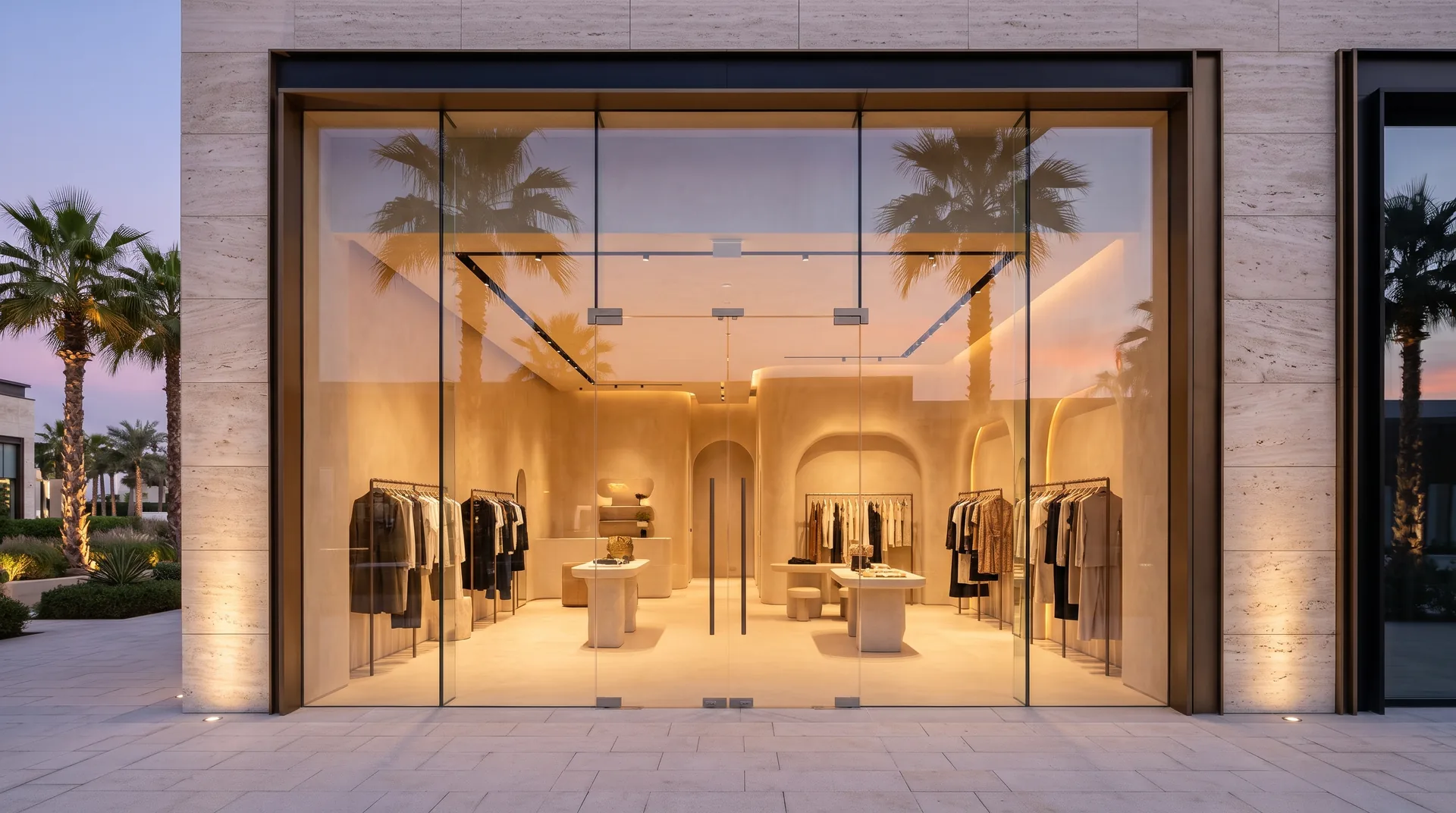
A Shopfront Has One Job
A shopfront has to make someone walking past stop, look and come in. Everything about the glass serves that: how clear it is, how little frame gets in the way of the display, how easily the door opens, and how it looks at night when the mall corridor or the street is dark and the shop is lit.
It also has to pass the people who are not customers. In a Dubai mall, the shopfront is the part of your fit-out the landlord cares about most, and its tenant design manual sets the height, the materials, the signage zone and how the shopfront meets the mall's floor and bulkhead. On a street, the glass has to deal with sun, dust and security after closing.
We draw shopfronts to the mall's or landlord's rules, prepare the documents for approval, and fit overnight or before trading hours so you lose as little time as possible. For glass inside the shop, such as display cabinets and mirror walls, see custom glass works and custom mirrors.
Mall Shopfronts and Street Shopfronts
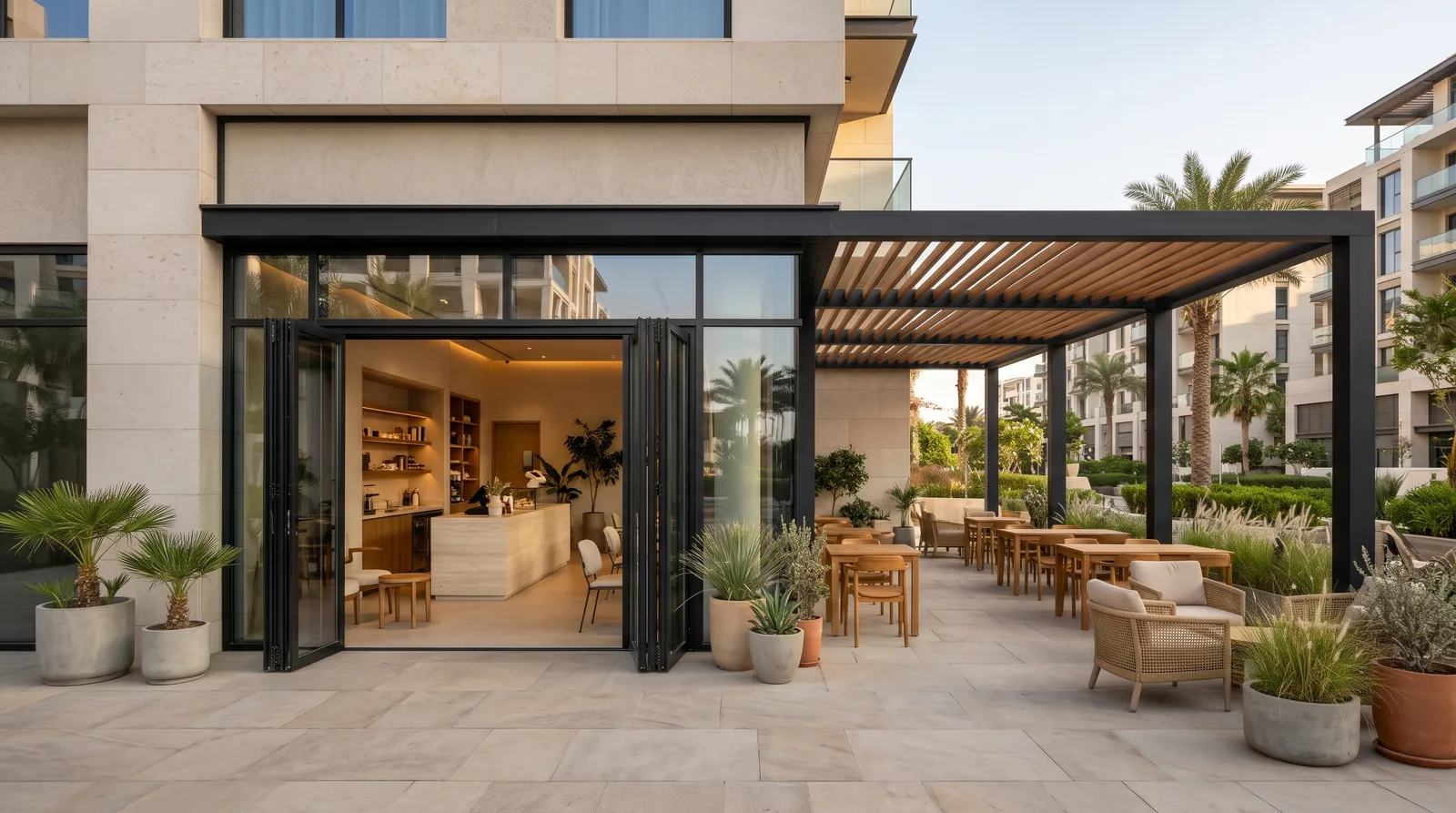
Mall Shopfronts
Usually frameless or slim-framed glass to a height set by the mall, under the mall's bulkhead and signage zone. Indoor, air-conditioned and protected, so the priorities are clarity, a wide door and passing the tenant coordinator's review.
Street-Front Shops
Shops, cafés and showrooms on a street or in a community retail centre. The glass faces sun, dust, rain and break-in risk, so framed aluminium, laminated glass, solar-control glass and roller shutters are more common.
Showrooms and Galleries
Large panes for car, furniture or kitchen showrooms, often in low-iron glass for true colours, with tall frameless doors or wide sliding doors for moving products in.
Restaurants and Cafés
Shopfronts that open fully with folding or sliding glass doors for terrace seating in the cooler months, closing tight for the summer AC.
Aluminium and Glass Shopfronts
An aluminium and glass shopfront uses powder-coated or anodised aluminium profiles to hold the glass and frame the door. It is the most common shopfront on Dubai streets and in community retail centres, and many malls also accept it.
Why choose aluminium. The frame carries the glass, so the panes can be thinner and the shopfront costs less per m². The frame also takes locks, shutters, ventilation and signage fixings easily, and seals well against dust and rain. Damaged panes are quicker and cheaper to replace.
Profile choices. Slim profiles of 50–65mm keep the look light; heavier commercial profiles span taller openings. Colours range from silver anodised to black, bronze and the mall's own RAL colour. Thermal-break profiles reduce heat coming through the frame on sunny street-facing shops.
Doors. Framed shopfronts take framed aluminium doors with a mortice lock and a floor or overhead closer, or a frameless glass door set into the aluminium surround for a more open entrance.
| Feature | Framed aluminium shopfront | Frameless glass shopfront |
|---|---|---|
| Look | Clean lines, visible frame | Almost all glass |
| Price per m² | AED 550–1,000 | AED 800–1,500 |
| Glass | 6–10mm toughened or 6.38–10.76mm laminated | 12mm toughened or laminated |
| Security and shutters | Easy to add locks and shutters | Needs planning at the design stage |
| Dust and rain sealing | Very good | Good indoors, harder outdoors |
| Replacing a broken pane | Quicker and cheaper | Larger, heavier panes |
| Best for | Street shops, budgets, sun-facing fronts | Mall units, boutiques, showrooms |
Frameless Glass Shopfronts
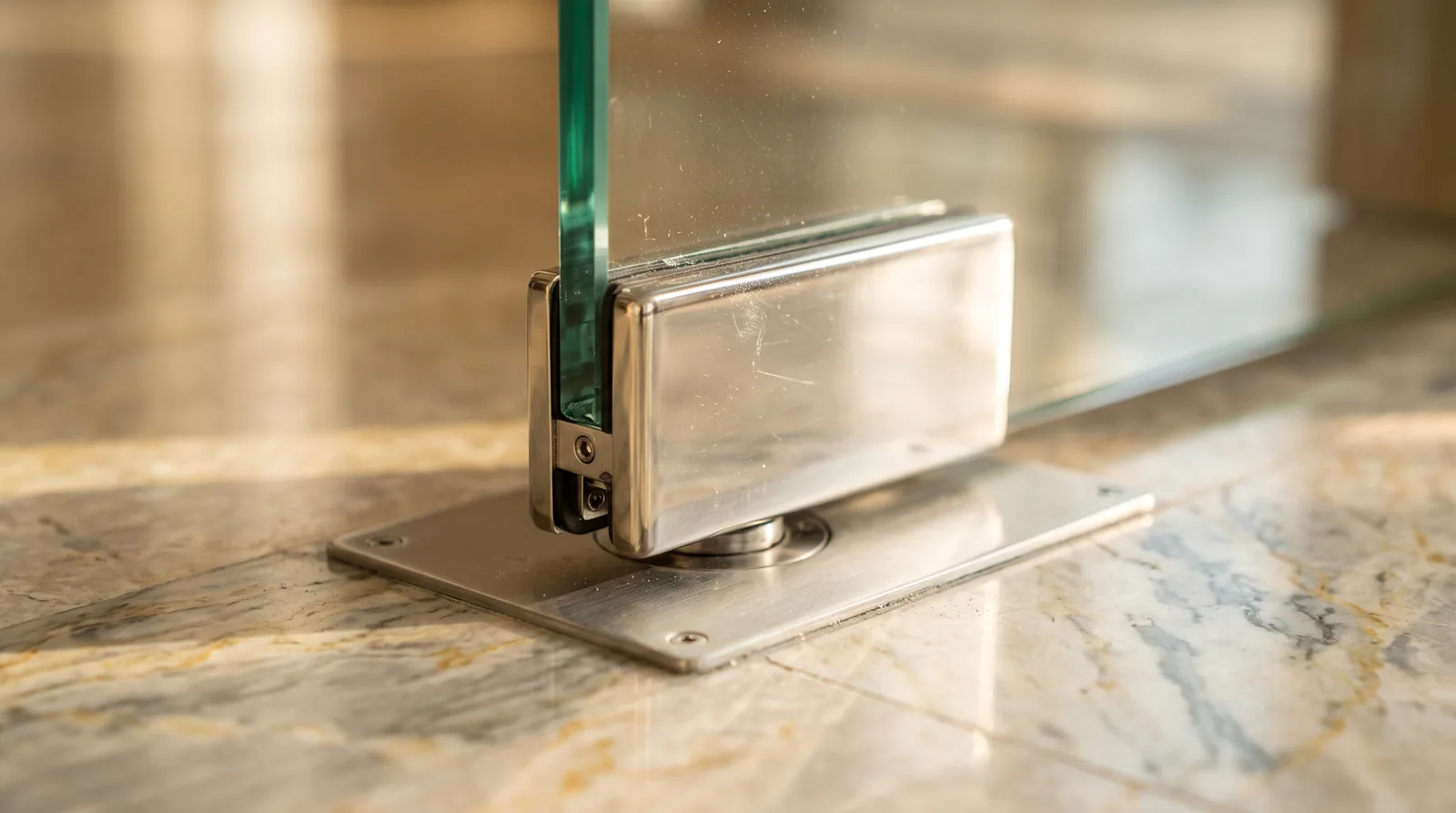
A frameless shopfront uses large panes of 12mm toughened or laminated glass held in a floor channel and a head channel or patch fittings, with frameless doors on floor springs. With almost no metal in view, the display and the shop interior become the shopfront.
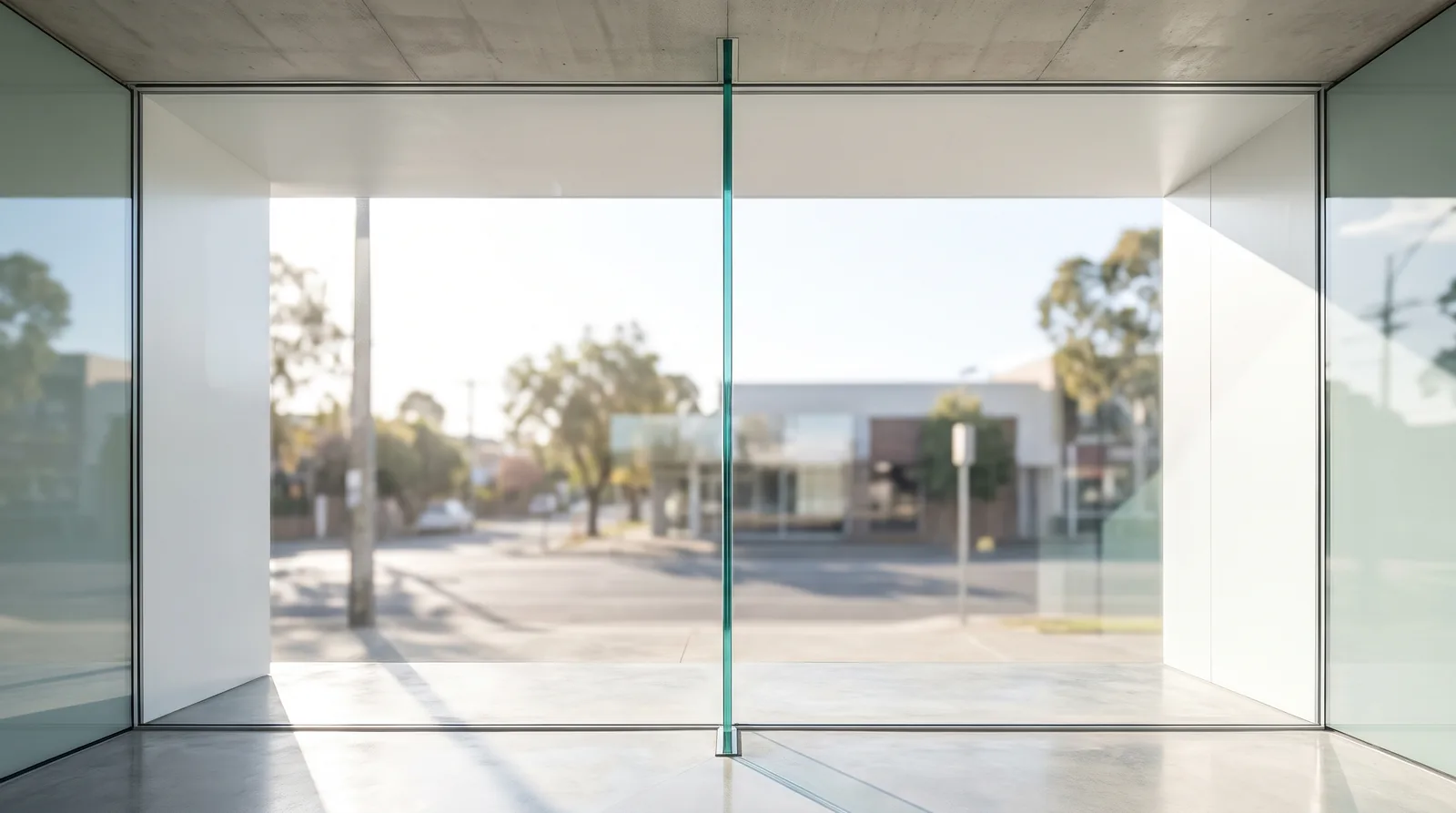
Glass fins. Tall or wide frameless panes need stiffening. Instead of a metal mullion, we use a glass fin: a narrow strip of glass set at right angles behind the joint, which keeps the front clear.
Low-iron glass. Ordinary clear glass has a slight green tint, visible at the edge and in thick panes. Low-iron (extra-clear) glass shows products in their true colours and costs about 20–30% more on the glass. Fashion, jewellery and showroom brands often specify it.
Head detail. In malls, the top of the glass usually meets the mall's bulkhead or your signage fascia. We fix the head channel to steel or the slab above, never to the gypsum bulkhead alone, and coordinate with the signage contractor so the fascia and the glass line up.
Choosing Shopfront Glass
| Glass | What it does | Cost effect | Use it for |
|---|---|---|---|
| Toughened (tempered) | About four to five times stronger than ordinary glass; breaks into small blunt pieces | Standard price | Mall shopfronts, doors, most panes |
| Laminated | Stays in place if broken, so the shop is not left open; better sound reduction | About 50–60% more on the glass | Street shops, low-level panes, security |
| Low-iron (extra-clear) | No green tint, truer product colours | About +20–30% on the glass | Fashion, jewellery, showrooms |
| Solar-control or tinted | Cuts heat and glare from the sun | Quoted per specification | South- and west-facing street fronts |
The full guide to safety glass is on our tempered and laminated glass page.
Security After Closing
Toughened glass is strong, but once it breaks the opening is gone. Laminated glass cracks and stays in the frame, so a break-in takes longer and the shop is not left open overnight. Street shops usually combine laminated glass with a lock on every door leaf and a motorised roller shutter.
Roller shutters. A shutter is fixed in a box above the shopfront and runs in side guides. Perforated or grille shutters let the display be seen at night; solid shutters give the most protection. We plan the shutter box and guides with the glass so they sit neatly behind the fascia. Mall units rarely need shutters because the mall is secured after closing, but some malls use a grille or a lockable sliding screen instead.
Mall Approvals and Opening Dates
In a Dubai mall, the shopfront is reviewed by the mall's tenant coordination team before any authority submission, against the mall's tenant design manual. The manual sets the shopfront height, the materials allowed, the signage zone, how far the shopfront can sit from the lease line and what hoarding must stand in front of the unit during works. After that, the fit-out goes to the authority for the area, and the fire-safety review checks exits and doors.
What we provide. Shopfront elevations and sections, the glass and hardware specification, the door swing and clear width, a method statement, our trade licence and insurance. We revise the drawings when the mall comments, which it often does on the first submission.
Working with your opening date. Glass is ordered only after the mall approves the shopfront, because toughened glass cannot be altered later. We book the fabrication slot as soon as the approval is close, fit in one or two nights, and leave the glass clean and protected for the signage and the opening.
Requirements differ between malls and landlords, so always ask for the latest manual. If you have appointed a fit-out contractor or approvals consultant, we work to their programme. For the full shop fit-out, our team also handles gypsum and ceilings, joinery, painting and MEP.
How Much Does a Glass Shopfront Cost in Dubai?
In Dubai, a glass shopfront costs about AED 550–1,000 per m² in framed aluminium and AED 800–1,500 per m² in frameless 12mm glass, supplied and installed. Frameless entrance doors cost AED 3,000–6,500 single and AED 6,000–11,000 double.
| Item (supplied and installed) | Price in AED |
|---|---|
| Framed aluminium shopfront, toughened glass | 550–1,000 per m² |
| Frameless 12mm glass shopfront | 800–1,500 per m² |
| Single frameless entrance door on a floor spring | 3,000–6,500 |
| Double frameless entrance doors | 6,000–11,000 |
| Double doors with side panels and fanlight | 9,000–18,000 |
| Laminated glass upgrade | About 50–60% more on the glass |
| Low-iron (extra-clear) glass upgrade | +20–30% on the glass |
| Motorised roller shutter | Quoted per opening |
| Automatic sliding entrance door | Quoted per project |
Worked examples. A 5 m wide, 3 m high mall frontage (about 15 m²) in frameless glass with double doors costs about AED 18,000–33,500. The same frontage in framed aluminium costs about AED 8,250–15,000 for the glazing, plus the doors.
What changes the price. The frontage width and height, frameless or framed, the glass type, glass fins on tall panes, the number and type of doors, shutters, and site conditions such as night-only working or a steel head support. Prices exclude VAT and mall or authority fees.
Get a Price for Your Shopfront
Send a photo of the unit and its frontage width and height, and the mall's design manual if you have it. We reply with a price range the same day and book a free survey for a fixed quote. Prices are indicative for 2026 and confirmed after the survey.
4 Shopfront Mistakes to Avoid
Ordering glass before the mall approves. If the mall asks for a different height or door position, toughened glass already made cannot be changed.
A light floor spring on a busy door. A shop entrance can open thousands of times a day. Specify a commercial-grade spring rated for the door weight.
No plan for the signage fascia. The glass head and the sign must meet cleanly. Agree the detail with the signage company before fabrication.
Clear glass with no marking. Large clear panes beside a door get walked into, especially when the shop is bright and the corridor is dark. Add a manifestation band or the logo at eye level.
How Mall and Street Shopfront Approvals Differ
| Feature | Mall unit | Street or community retail |
|---|---|---|
| First review | Mall tenant coordination, against the tenant design manual | Landlord or community management |
| Design limits | Height, materials, lease line, signage zone, hoarding | Facade line, signage size, shutters, community style |
| Working hours | Usually after mall closing | Usually before or after trading, by agreement |
| Typical glass | Frameless toughened or laminated, often low-iron | Framed aluminium, laminated, solar control |
| Security | Mall secured at night; shutters rarely needed | Shutters, laminated glass and locks on every leaf |
| Weather | Indoor, air-conditioned | Sun, dust, rain and heat on the frame |
Free-zone and master-community retail can add another layer, with their own design guidelines and permits. We ask for the latest rules at the start and draw to them, so the shopfront is approved on the first or second submission rather than the fourth.
How a Shopfront Is Fitted in One Night
In most malls the shopfront goes in after closing so the corridor is clear by morning. This is how a typical night runs.
- 01
Delivery and Protection
Glass arrives at the loading bay at the agreed time, the corridor floor is protected and the hoarding is opened.
- 02
Channels and Head Fixing
The floor channel and the head fixing to steel or slab are set and levelled. On many jobs these are fixed on an earlier night.
- 03
Glass and Fins
The panes are lifted in with suction lifters, set in the channels and stiffened with glass fins where needed.
- 04
Doors and Hardware
Floor springs are set, doors hung, locks fitted and the closing speed adjusted.
- 05
Seal, Clean and Hand Back
Joints sealed, glass cleaned, the hoarding closed and the corridor handed back to the mall before opening.
Large panes are heavy. A 12mm pane 1.5 metres wide and 3 metres high weighs about 135 kg, so the lifting plan, the team size and the route from the loading bay are agreed with the mall before the night.
Signage, Fascia and Lighting
The shopfront glass, the sign above it and the lighting behind it are often made by three different companies. Where they meet is where most shopfronts go wrong.
The head detail. Agree with the signage company where the glass stops and the fascia starts, how the sign is fixed and where its power comes from, before the glass is ordered. A sign fixed through the head channel can crack the glass.
Window lighting. Spotlights aimed at the glass reflect in it and hide the display. We set the glass line with the shopfitter so the lights sit behind the display and point at the products, not at the window.
Vinyl and graphics. Opening-hours text, offers and brand graphics on the glass are usually applied by the signage company after we finish. We leave the glass clean and dry, with the manifestation band at eye level as required.
Looking After a Shopfront
Clean Little and Often
Dust and fingerprints show fast on clear glass. A soft squeegee and mild cleaner every day or two keeps it bright; never use scrapers on coated or laminated glass.
Service the Floor Springs
Busy shop doors open thousands of times a day. Check the closing speed and oil leaks every 6–12 months and replace worn springs before they fail.
Check Seals on Street Fronts
Sun and heat age silicone and gaskets on street-facing frames. Renewing them every few years keeps dust and rain out and the AC in.
Glass Shopfronts Across Dubai
Shopfronts fitted in mall units, community retail centres and street-front shops across Dubai, including Downtown, Business Bay, Dubai Marina, JLT, Al Barsha, Jumeirah, Al Wasl, Deira, Bur Dubai, Al Quoz, Dubai Hills, Arabian Ranches and Dubai Silicon Oasis.
- 61communities covered
- 3service zones
- Freesite visit before we quote
- Ownin-house tradespeople
Villa communities
- Emirates Hills
- Palm Jumeirah
- Dubai Hills Estate
- Al Barari
- Arabian Ranches
- Arabian Ranches 2 & 3
- Jumeirah Golf Estates
- District One
- Tilal Al Ghaf
- DAMAC Hills
- DAMAC Hills 2
- The Villa
- Mudon
- Villanova
- The Springs
- The Meadows
- The Lakes
- Emaar South
Waterfront & central
- Dubai Marina
- Jumeirah Lakes Towers (JLT)
- Downtown Dubai
- Business Bay
- Emaar Beachfront
- Bluewaters Island
- Dubai Creek Harbour
- City Walk
- Sobha Hartland
- Meydan
- Nad Al Sheba
- MBR City
- JBR
- Pearl Jumeirah
- Dubai Harbour
- The Greens & The Views
- Al Jaddaf
All neighbourhoods
- Jumeirah 1, 2 & 3
- Al Wasl
- Umm Suqeim
- Al Safa
- Al Barsha
- Barsha Heights
- Jumeirah Park
- Jumeirah Islands
- JVC
- JVT
- Al Furjan
- Discovery Gardens
- Victory Heights
- Motor City
- Dubai Sports City
- Town Square
- Remraam
- Serena
- Mirdif
- Al Khawaneej
- The Sustainable City
- Dubai South
- The Valley
- The Oasis
- Dubai Islands
- Green Community
Most requested communities. Don’t see yours? We cover every area of the Dubai emirate — message us on WhatsApp and we will confirm.
Glass Shopfront Installation – FAQs
14 questions answered
Send it with a photo on WhatsApp and we will answer it, usually within one working day.
How much does a glass shopfront cost in Dubai?
A glass shopfront in Dubai costs about AED 550–1,000 per m² in framed aluminium and AED 800–1,500 per m² in frameless 12mm glass, supplied and installed. Frameless entrance doors add AED 3,000–6,500 single or AED 6,000–11,000 double. A 5 m mall frontage in frameless glass with double doors costs about AED 18,000–33,500.
Aluminium or frameless shopfront, which is better?
Frameless shows more of the display and suits mall units, boutiques and showrooms. Framed aluminium costs less, seals better against dust and rain, takes locks and shutters easily and is cheaper to repair, so it often suits street-front shops.
What glass is used for shopfronts?
12mm toughened glass is standard for frameless shopfronts and 6–10mm toughened or laminated glass for framed ones. Laminated glass is used where security matters because it stays in place when broken, and low-iron glass where product colours must look true.
Does the mall have to approve my shopfront?
Yes. Dubai malls review shopfronts through their tenant coordination team against the tenant design manual before the authority submission. We prepare the shopfront drawings and specification and revise them to the mall's comments. Always ask the mall for the latest manual.
How long does a shopfront installation take?
After the mall or landlord approves the drawing, the glass and frames take about 7–14 working days to make, and the shopfront is usually fitted in one or two nights. Allow two to three weeks from approval to finished glass, more for automatic doors.
Can you install the shopfront at night?
Yes. Most mall shopfronts are fitted after closing, and street shops before or after trading hours. Night working is arranged with the mall or landlord and shown on the quote.
Do I need a roller shutter for a glass shopfront?
Street-front shops usually do, for security after closing, combined with laminated glass and locks on every door. Mall units rarely need one because the mall is secured at night. Shutters are planned with the glass so the box and guides sit neatly behind the fascia.
What is a glass fin on a shopfront?
A glass fin is a narrow strip of glass fixed at right angles behind the joint between two tall panes. It stiffens the shopfront against pushing and wind instead of a metal mullion, so the front stays almost all glass.
What is low-iron glass and is it worth it for a shop?
Low-iron glass has less iron than ordinary clear glass, so it has no green tint and shows products in their true colours. It costs about 20–30% more on the glass and is worth it for fashion, jewellery, cosmetics and showrooms.
Can a shopfront open fully for terrace seating?
Yes. Cafés and restaurants often use folding or sliding glass doors across the front so it opens fully in the cooler months and closes tightly for the summer AC. The system is chosen for the opening width and how often it will be opened.
Can a broken shopfront pane be replaced quickly?
Yes. We make the opening safe the same day and order a new toughened or laminated pane to the measured size, which usually takes a few working days. Framed shopfronts are quicker to reglaze than large frameless panes.
How is a mall shopfront installed without closing the mall?
The shopfront is fitted after the mall closes, behind the hoarding. Channels and head fixings are often set on an earlier night, then the glass, fins and doors go in, the joints are sealed and the corridor is handed back clean before opening.
How heavy is shopfront glass?
Glass weighs about 2.5 kg per m² for every millimetre of thickness. A 12mm pane 1.5 metres wide and 3 metres high weighs about 135 kg, so it is lifted with suction lifters and a team, on a route agreed with the mall or landlord.
Who installs the shop sign above the glass?
The signage company usually makes and fixes the sign. We agree the head detail with them before the glass is ordered, so the sign is not fixed through the glass channel and the fascia and the glass line up neatly.
Send Us a Photo of Your Shopfront
A photo of the unit with the frontage width and height is enough for a price range the same day, followed by a free survey and a fixed, itemised quote.