
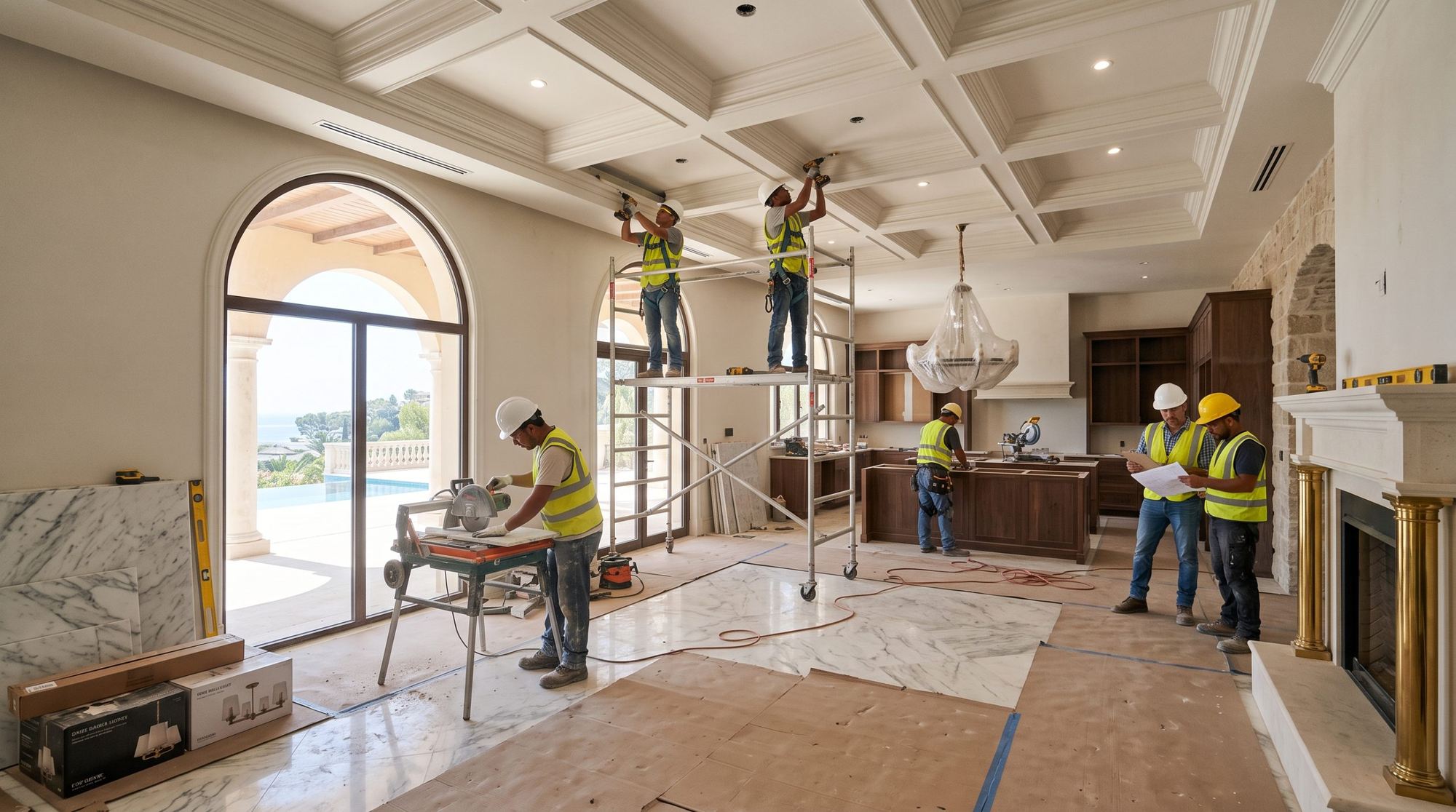
Short answer: before you move out of a Dubai rental, remove your own fixings, fill and sand every hole, touch up the paint in the original colour, re-silicone tired joints in the bathroom and kitchen, fix dripping taps and running toilets, replace blown bulbs, adjust sticking doors and wardrobes, service the AC and clean thoroughly. These are the points landlords and agents check at the move-out inspection before returning the security deposit. Most apartments need one full-day handyman visit, about AED 700–1,200 plus materials; moving in, do the same checks and record everything with dated photos.
Moving home in Dubai means two inspections: the one you do when you collect the keys, and the one the landlord or agent does when you hand them back. The second decides how much of your security deposit comes back. This guide gives you a room-by-room checklist for both, explains what counts as damage and what counts as normal wear, and shows what the repairs usually cost, so you can plan one visit instead of a rushed scramble on the last day.
At a glance
- Moving in: inspect every room, test every fitting, photograph everything with the date, and report defects in writing within the first days.
- Moving out: remove fixings, fill holes, touch up paint, reseal wet areas, fix leaks, replace bulbs, service the AC, clean.
- Typical cost: one full-day visit at AED 700–1,200 plus materials for most apartments; a half day at AED 400–700 for small lists.
- Timing: book the repairs for a week before the handover, not the last day, so anything unexpected can still be fixed.
How the Move-Out Inspection Works in Dubai
When you rent a home in Dubai, you usually pay a security deposit to the landlord, commonly around 5% of the annual rent for an unfurnished home and more for a furnished one. The deposit is returned at the end of the tenancy, minus the cost of any damage beyond normal wear and tear, unpaid bills or missing items. The terms are set out in your tenancy contract, which is registered through Ejari.
Before the deposit is released, the landlord or the agent inspects the property, usually with the original move-in condition report and photos. They look at walls, floors, fittings, appliances, AC and cleanliness, and list anything that needs repair. If you disagree with the deductions and cannot settle it with the landlord, disputes go to the Rental Disputes Centre.
The practical lesson: the inspection is about evidence. A clear move-in record and a property that is handed back clean, repaired and working leave very little room for argument.
Normal Wear and Tear or Damage?
Landlords cannot usually charge you for the normal ageing of a home, but they can deduct for damage. The line is not always obvious, so here is how it is commonly understood:
| Normal wear and tear | Usually treated as damage |
|---|---|
| Paint slightly faded or lightly marked over the years | Large scuffs, crayon, stains or walls painted a different colour without consent |
| A few small nail holes | Many holes, large plug holes, or brackets left on the wall |
| Silicone slightly discoloured | Mouldy, lifting or missing silicone after years without cleaning |
| Carpet or floor worn in walkways | Burns, deep scratches, chipped tiles or water-damaged wood |
| Loose hinge or handle from use | Broken doors, missing handles or wardrobe doors off their tracks |
| AC needing a routine service | AC that has not been serviced and has blocked drains or damage |
Check your tenancy contract and the move-in report; they may set out specific conditions, such as repainting in the original colour or a professional clean.
Moving In: Inspect and Record Everything
The best time to protect your deposit is the day you get the keys. Before you unpack, walk through every room and record the condition with dated photos and short videos. Then send a written list of defects to the landlord or agent by email, so there is a clear record.
What to check on move-in:
- Walls and ceilings: holes, cracks, stains, damp patches, old fixings and patchy paint.
- Floors: chipped or cracked tiles, scratches on wood or vinyl, loose skirting.
- Doors and wardrobes: every door opens, closes and locks; hinges tight; sliding doors run smoothly; handles present.
- Kitchen: cabinet doors aligned, drawers run, no swelling under the sink, worktop joints sealed, appliances working.
- Bathrooms: taps and mixers do not drip, toilets flush and refill, drains run freely, silicone clean, extractor fans work.
- Electrical: every socket, switch and light works; no scorch marks; the distribution board is labelled.
- AC: each unit cools, no drips, no musty smell; ask when it was last serviced.
- Windows and balcony: handles lock, seals intact, tracks clean, no sand blowing in.
- Keys, cards and remotes: count them and note them in writing.
If there are many small defects, ask the landlord to arrange the repairs before you move in, or agree in writing who will fix what.
Moving In: Jobs to Do Before the Furniture Arrives
An empty home is the easiest place to work. A half-day or full-day handyman visit before the movers arrive usually covers:
- TV mounting on the right fixing for the wall, with cables tidied: about AED 100–350 per TV.
- Curtain rails and blinds in every room: about AED 150–300 per window.
- Mirrors, frames and shelves: about AED 100–150 per shelf.
- Bathroom accessories: towel rails, robe hooks, toilet roll holders.
- Furniture assembly for beds, wardrobes and desks, with anti-tip brackets fixed to the wall: about AED 100–250 per item.
- Small repairs from your move-in list that the landlord has agreed you can do.
Keep every fixing you add in mind, because each one becomes a hole to fill when you leave. Using the same bracket positions as the previous tenant, where possible, saves work later. For prices on every job, see our handyman prices guide.
Moving Out: Room-by-Room Repair Checklist
Use this checklist two to three weeks before your handover. Tick off what you can do yourself and send the rest to a handyman as one list.
Living and bedrooms
- Remove TV brackets, shelves, curtain rails you added and picture hooks.
- Fill every hole, sand it smooth and touch up the paint.
- Wipe scuffs and marks from walls, doors and skirting.
- Check wardrobe doors open and close evenly; adjust hinges and sliding rollers.
- Replace blown bulbs, including in spotlights.
Kitchen
- Adjust cabinet doors and drawer runners.
- Re-silicone the joint between the worktop and the wall or splashback if it is discoloured or lifting.
- Check under the sink for drips and swelling.
- Clean the extractor hood filter and the oven.
- Make sure every appliance included in the tenancy works.
Bathrooms
- Cut out old, mouldy silicone around the bath, shower and basin and reseal.
- Fix dripping taps and running toilets.
- Descale shower heads, taps and glass screens.
- Clean the extractor fan grille and check it works.
- Clear slow drains.
Throughout
- Test every socket, switch and light; replace damaged face plates.
- Service every AC unit and keep the invoice.
- Clean balcony tracks and window seals.
- Return all keys, access cards, parking cards and remotes.
Repainting: Touch-Up or Full Repaint?
Paint is the most common deduction at move-out in Dubai. Whether you need a touch-up or a full repaint depends on the condition and on your contract.
- Touch-up: a few filled holes and small marks in walls that are otherwise in good condition. Use the exact original colour and finish; a slightly different white shows clearly in Dubai's bright light. A move-out touch-up across an apartment usually fits into a full handyman day.
- Full repaint: walls with many marks, patchy previous touch-ups, a colour you changed, or a contract that requires repainting at the end of the tenancy. Our apartment painting page has lump-sum prices from AED 1,500–3,500 for a studio up to AED 4,500–12,000 for a three-bedroom apartment.
If you are not sure of the original colour, ask the landlord or building management; many towers use a standard white from a known brand.
AC, Cleaning and the Final Handover
Two items often decide whether the inspection goes smoothly: the AC and the cleaning.
AC service. Many tenancy contracts expect AC units to be handed back clean and working. A standard service costs about AED 100–150 per unit; keep the invoice to show at the inspection. See our AC maintenance page.
Cleaning. A thorough clean of floors, kitchen, bathrooms, glass, cupboards and balcony is expected. Do it after the repairs, not before, because filling and sanding create dust.
On the day:
- Attend the inspection in person if you can.
- Bring your move-in photos and report.
- Go room by room with the landlord or agent and agree any items in writing.
- Take dated photos of the finished property.
- Hand over keys and cards against a signed receipt.
- Ask when and how the deposit will be returned.
What Move-Out Repairs Usually Cost
These are typical 2026 prices for move-out work in Dubai, labour only, excluding VAT. Filler, silicone and paint are extra.
| Home | Typical move-out list | Visit | Typical cost (AED) |
|---|---|---|---|
| Studio | 10–15 holes, touch-up paint, silicone, bulbs | Half day | 400–700 |
| One-bedroom | 15–25 holes, touch-up paint, silicone, two doors | Half to full day | 400–1,200 |
| Two-bedroom | 20–30 holes, touch-up paint, two bathrooms, wardrobes | Full day | 700–1,200 |
| Three-bedroom | 30+ holes, touch-up paint, three bathrooms, doors | Full day, two technicians | 1,200–1,800 |
| Villa | Large list across floors, outside lights, doors | One to two days | Quoted after photos |
AC servicing, deep cleaning and full repainting are priced separately. For a job list that spreads over several trades, we put everything in one quote so you can see the full cost before the visit.
Landlords: Getting a Unit Ready Between Tenants
For landlords, the period between tenants is the cheapest time to fix things, because the home is empty and nobody's daily routine is disturbed. A planned visit covers the same checklist as a move-out, plus anything the outgoing inspection found. We check taps, mixers, toilets, sockets, lights, doors, wardrobes and AC, fix what we can on the spot and send you a priced list of anything bigger.
Typical costs: AED 200–500 for a maintenance visit with a short list, or a full day at AED 700–1,200 for a complete snag between tenancies. If you manage several units, an annual maintenance contract from AED 2,500 a year can include visits between tenancies; see our home maintenance services.
New-Build Handover: Snagging Before You Move In
If you are moving into a newly completed apartment or villa, inspect it carefully at handover from the developer. Look for the same items as a move-in check, plus finishing defects: uneven tiles, gaps in grout and silicone, doors that do not close, poorly fixed fittings, paint drips and electrical points that do not work. List every defect with photos and send it to the developer in writing, so it can be fixed under the developer's defects arrangements before you move in.
For anything you want to change after handover, such as extra lighting, wardrobes or kitchen updates, see our home renovation page.
Villas: Outside Areas and Extra Checks
Villas have more to check than apartments, and the outside areas are often forgotten until the inspection. Add these to your list if you rent a villa or townhouse:
- Outside lights and sockets: replace blown bulbs and check covers are sealed against dust and water.
- Garden taps and irrigation: fix drips and check the timer and valves work.
- Gates, garage doors and shutters: tracks cleaned, rollers and motors working, remotes returned.
- Pergolas, shades and fences: loose fixings tightened, broken slats noted.
- Staircases and balustrades: handrails firm, glass panels clean and secure.
- Roof terraces and balconies: drains clear of sand and leaves so water can run away.
- Maid's room, laundry and store rooms: often left until last and easy to miss.
A villa move-out often runs to one or two days with two technicians. Send photos of each area and we will plan the visit so the heavy items and the outside work are done first, before the final clean.
Furnished Homes: Furniture and Appliances
If you rent a furnished home, the inventory is part of the inspection. Check it against the list you signed at move-in:
- Furniture: every item present, no broken legs, loose joints or stained upholstery beyond normal use.
- Beds and wardrobes: assembled as they were, with shelves, rails and drawers in place.
- Appliances: working, clean, with manuals and remotes returned where listed.
- Curtains and blinds: cleaned or laundered if the contract asks for it, and every rail and cord working.
- Soft furnishings: cushions, rugs and linens as listed.
Small repairs to furniture, such as tightening a loose bed frame, re-hanging a wardrobe door or adjusting a drawer, are quick handyman jobs. Replacing a damaged item is usually a cost agreed with the landlord.
A Move-Out Timeline That Works
Leaving everything to the last weekend is the most expensive way to move out. This timeline keeps it calm:
- Four weeks before: read your tenancy contract for move-out conditions, confirm the inspection date with the landlord or agent, and find your move-in report and photos.
- Three weeks before: walk through with this checklist and send your list and photos for a price.
- Two weeks before: book the handyman visit, AC service and cleaning in that order.
- One week before: repairs and touch-up painting done; time left for paint to dry and anything unexpected.
- Two to three days before: deep clean after the movers have left.
- Handover day: inspection, photos, keys and a signed receipt.
Common Move-Out Mistakes
These are the problems we see most often when tenants call us the day before the handover:
- Leaving it to the last day. There is no time to let filler dry, paint cure or a part arrive.
- Touching up in the wrong white. It looks worse than the hole did.
- Silicone over silicone. New silicone over old mould peels within days and looks obvious.
- Forgetting the AC. A missing service invoice is an easy deduction.
- Cleaning before the repairs. Sanding dust ends up everywhere you just cleaned.
- No photos. Without a move-in record and handover photos, it is your word against the report.
- Removing brackets without filling. Bare plug holes in a wall are one of the most common deductions.
Book a Move-In or Move-Out Visit
The simplest way to get it all done is one visit. Walk through the home with this checklist, note everything, and send the list with photos through our contact page. We will tell you whether it is a half or full day, give you the price and book a slot a week before your handover, so there is time to spare. For everything else we fix, see our handyman services page, and for advice on choosing anyone to work in your home, read our guide on how to hire a handyman in Dubai.